Nordic’s new Thingy:91 X already works on Golioth
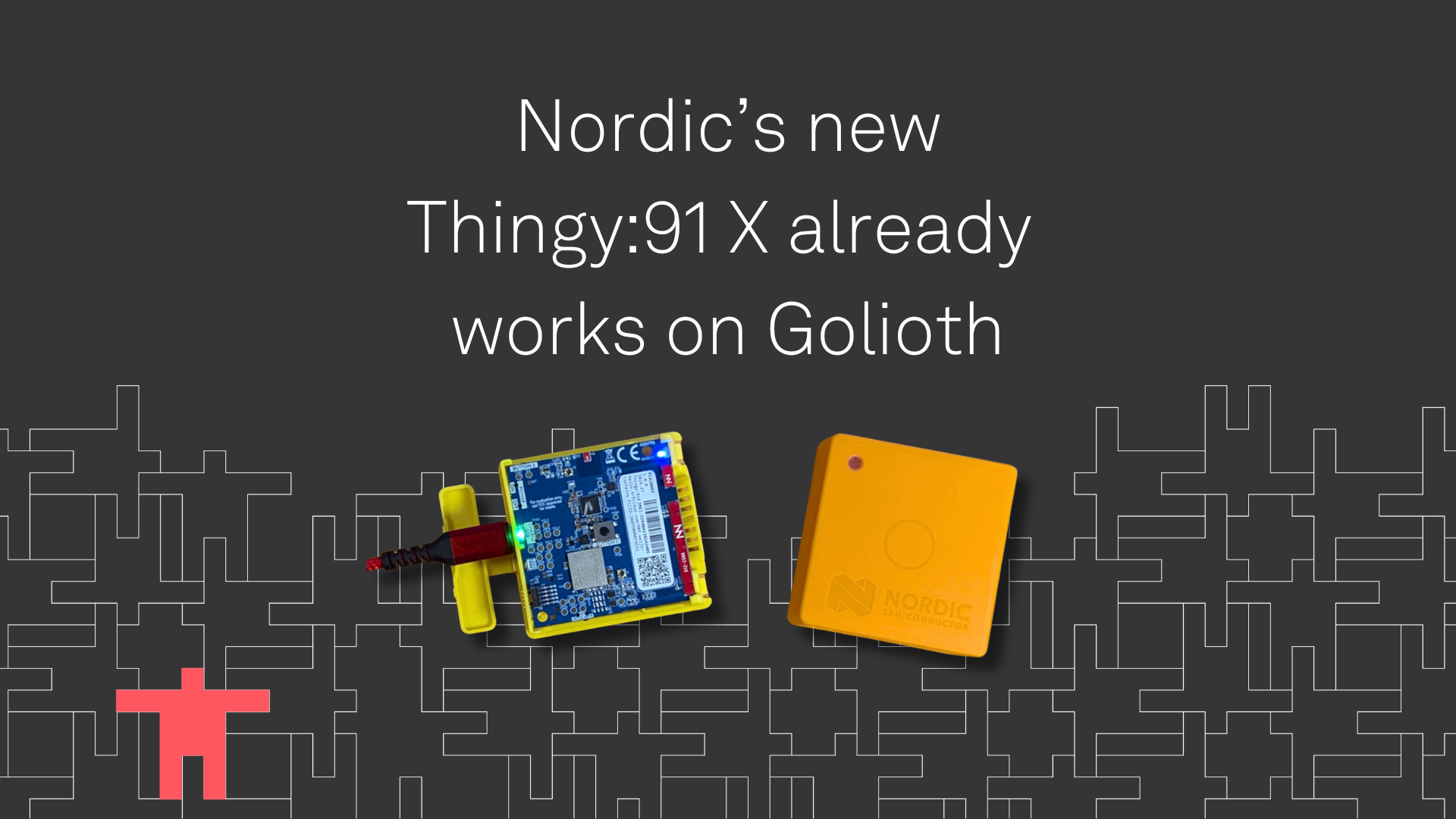
The Thingy:91 X is an upgrade to the original Thingy:91 which enables new features like WiFi, additional sensors, upgraded memory partitions, and new connectors to make extensibility a breeze. Best of all, it already works on Golioth!
The Thingy:91 X is a new prototyping platform from Nordic Semiconductor based on the nRF9151 System-in-Package (SiP). You get a cellular modem, Bluetooth chipset (nRF5340), Wi-Fi offload processor (nRF7002), GNSS, environment sensor, magnetometer, accelerometer, IMU, gyroscope, power management features (nPM1300), all powered from a battery and in a nice small orange case; there are also connectors to enable extending this design using Stemma/QWIIC connectors, and power measurement of each individual chipset. Out of the box, it’s an IoT device ready to use, especially because it already works on the Golioth device management platform!
Old Versus New
The new Thingy:91 X is the successor to the Thingy:91. The original model is based on the nRF9160, and includes a color sensor along with environment and accelerometer/IMU. The new model adopts the nRF9151, which is Nordic’s latest cellular offering. You may remember us
taking the nRF9151 DK for a test-drive back in June. It includes separate accelerometer and gyro chips, a similar environment sensor offering, and leaves off the piezo buzzer and color sensor (RIP PWM chiptunes).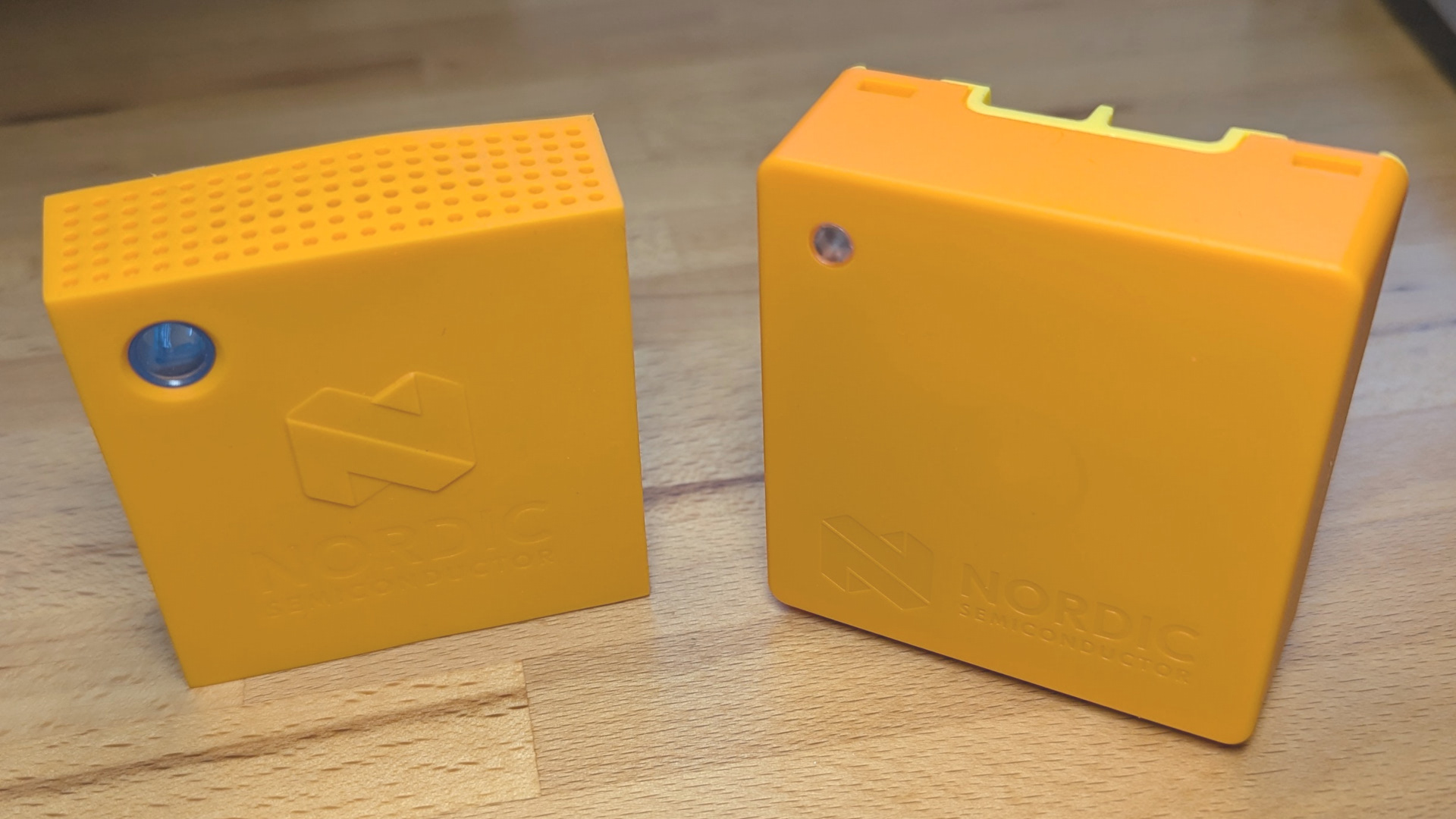
socs folder in the same way that the boards folder works. We were pleasantly surprised that in our projects the configuration is the same for both.
Connect Your Thingy:91 X to Golioth, No Compilation Necessary
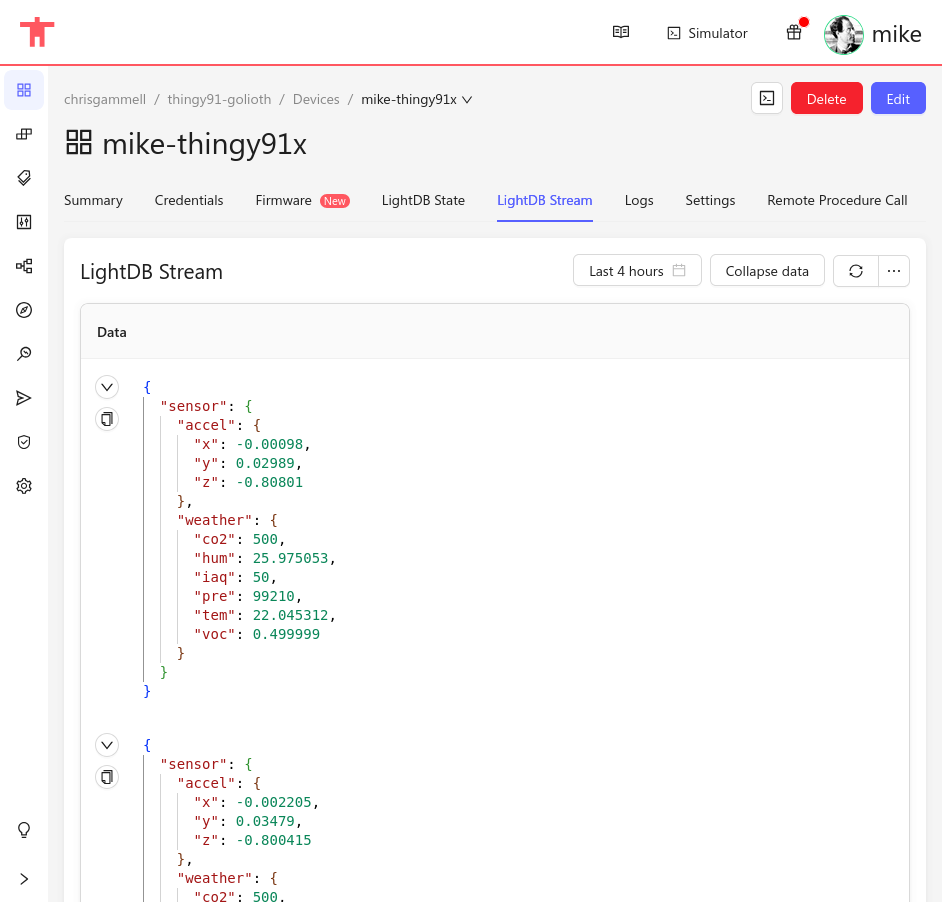
We have supported the Thingy91 as a Golioth Reference Design for a long time. And I’m happy to report that we have added the Thingy91X to the same project. Better yet, you can try out
Golioth without needing to compile anything. Full details are available on the thingy91-golioth repository. We adapted the codebase to account for differences between the boards. Since the 91X doesn’t have the piezo buzzer or the light sensor of its predecessor, there’s a bit of conditional code to retain legacy support. For the other 91X sensors, Zephyr’s abstraction layers made the change a matter of crafting board configuration and overlay files. And as mentioned before, we simply copied all of the same configuration for the nRF9160 into a file for the nRF9151.